- Design is aimed at reducing waste.
Maybe this lean perspective is the source of the first definition but I would not know.


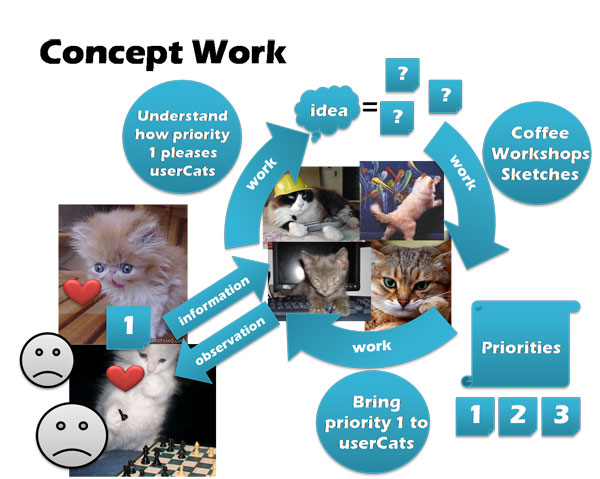


To practice the kinds of principle which are described by Lean I started with creating a piece of music. I like making music, it is meditative and it uses some of my usually dormant skills which when I fire them back up gives me a serious dose of pleasurable feedback chemicals in my brain. Anyhow, creating music is an example of a very well defined production system and I like making abstract generalizations from things I know well to things I know less well. On the whole I can claim to be quite an efficient music production team all on my own, something I have a hard time claiming for the art of making games. Games require so much wider skill sets to go from idea to fully implemented in the cases that I am interested in so I can’t make a micro experiment to test the concepts of Lean development on my own with the game medium, and I can’t program well enough to make anything useful.
One of the great advantages with creating music is that I have access to a relatively decent implicit iterative method which covers the full production pipeline. I can tell if the instruments are tuned poorly, if the arrangement is busted and such technicalities. I can even tell if playing the instrument in the recording is giving a result which pleases the musician. This means that I pretty much know when I am cheating the creative process by accepting less than flawless components in the production. I can also cheat and get some explicit feedback from various sources such as sending snippets to friends over the internet or check details with a spectrum analyzer etc.
I also know that the end result is the interaction between the components and that I will not really be able to know in advance if a production will be good or not. I can generally feel it growing if I keep working on something which keeps me motivated. Almost everything which I ever finish is based on a mashup of old prototype songs. This mashup process is something similar to stage gate portfolio management which defines little pieces but without the information of how the pieces should interact to deliver an impression. This is also poorly managed by me with various references in my brain and plenty of broken snippets of recordings which I usually forget about. To bring this mess of components to life as something which I can claim to be something I finished I have to work through what my limited experience would label as a large process. I don’t like using samples, when I try I tend to get bogged down in editing the samples so its more efficient for me to just go straight at making the whole arrangements and tweaking the hell out the individual instruments.
The way I make music is fundamentally iterative. The goal is a mix of creation and refinery towards reaching greatness. Greatness is a state of perfect fit, “the goose bump factor”, an implementation which creates unique emotional response of some kind. This is hard work, I am rarely motivated enough to not give up and leave the effort as a part of the busted stage gate portfolio. It happens sometimes that I keep on going and the finished results are what I can use to run production technique experiment.
Writing this I sense that I will not be able to combine the whole argument in one big post. I will have to dig at details another time if I get there but I got some direct references at this point.
1 – Make it Flawless; applies to music production. This is a well known oldskool audio engineering principle which says that: “Make quality recordings of sounds; you can not make bad sounds good by tweaking them.” You can also not effectively engineer up a poor performance or a bad melody through creative editing, you can make it better yes, but you will be much less efficient than making the recording good in the first place. Compromising these early stages of the music production is like technical debt in software development, you can use them to move fast to a certain point but you will never reach greatness unless you go back at a later point and fix it. Such late fixes are often big risks as the new recording might interfere with the whole arrangement. This often leads to cascading failure of the whole production and all you get is yet another ambitious component of the stage gate portfolio.
2 – One piece Flow; this very much applies to music production. If you fail to follow it you will fail the Make it Flawless principle and learn to accept a poor result. The trick to one piece flow is to know your production method which is much easier in the world of music than when making games, especially for me since the process of making music in my case happily operates at a loss as long as I have fun with it. In the world of music production this goes through layers of development. You will benefit greatly from having the rough shape of the arrangement in place before starting to mix, you don’t start with the mix because then you will break the idea of one piece flow and en up with all pieces. The real question here is what the “one piece” is. In music the “one piece” is a multi dimensional argument. It can be used for an instrument, section, harmony, melody, mix, arrangement, lyrics and so on. The matter is the ability to identify the pieces and to learn how to be satisfied with one particular piece. This identification has its roots as a craftsmanship based on skills, theory and vision.
3 – Maintain multiple options; this is integrated with tools pipeline. In an ideal world I would call this “the mix” which is what you do last before sending the work to the ears of an audience. I am not sure if this is because I want the reference to fit or if it fits. The idea also carries through the arrangement by the theoretical structure of music theory. There is this huge set of lore which a master musician can use to apply multiple options to any given situation. I am not a master in this sense but I had an awesome Jazz teacher who showed me a few things about which doors can be opened to toss things around in a technically “legal” manner. It has been half a life time in my world since I had those lessons but their fundamental concept remains with me still. I’ll tell you the secret right here: All that theory is just a shortcut for connecting your ears to be the judge of what is good. It is a great shortcut and it is the key to collaboration and communication about the creative process of the medium. But it is nothing which resembles strict laws and the rules are there to be broken by the creator at will.
4 – Avoid Waste. This is a tricky beast, also very relevant to music. Defining what waste is in a music production is not that straight forward. Recording random things and putting them together is generally waste, sometimes it is a process which rapidly can fill up the stage gate with concepts. The real answer to the question of what waste is depends on the vision and goals of the production. If the goal is to increase the stage gate then an ambitious mix is waste, if the goal is to deliver on a vision then aimless noodling and random recording is waste. To know how to spot waste you need to be a well practiced craftsman of music creation.
My biggest problem for my music hobby is lack of vision. I like to blame this on the extremely efficient development method which gives me an extremely agile context. The studio software allows me to change anything at any time so I never feel like I have to spend any effort at creating a vision for the work. This makes it easy to get a false sense of progress towards greatness and the lack of vision rears its ugly head as technical debt within the whole arrangement which sends everything to the stage gate relatively often.
All of this stuff is generally applicable to most things in life. The biggest problem with implementing process optimizations toward value production is a lack of common grounds for communicating these kinds of ideas. Just as it is hard to make a band play good music without a fundamental common ground in music theory it becomes hard for a game developer to make good games without a common ground in development methodology and game design theory. Lack of common ground will require blind faith which is a rare human trait and it rarely lead to good results.
Anyone who read this is statistically likely to be annoyed by it. It is also not founded in any real research that I know about, just a bunch of conclusions drawn by myself through looking at things and probably cherry picking my sources.
Humans are agents in a big system based on other humans and the rest of the world they live in. The system is too large for us individuals to see how the system works even at a short distance away from where we stand. This is what makes us individual, local properties.
What makes us different on an individual level is what we know and how we think and this might appear like great differences on the surface. But in fact it stands for a tiny portion of what a person is in comparison to the position within the whole system. The definition of the individual – you come from your most immediate surroundings through life until now and your expectations on the future based on extrapolating the system in a predictable direction.
As we grow up we learn to attach blame and praise for how we operate on ourselves but this is primarily a bunch of fake social magic which our system has invented as method for success, as success for the system, not for you, through the last few thousand years. The biomechanical machinery in your brain is built to trigger on stimuli which it learns to associate with rewards or stress based on randomly testing the world to see how it operates. We spend the vast majority of this random testing on figuring out how people within the system work and what things we can do to make them exhibit useful behavioral patterns. It was quite a different result a long time ago when we roughly belonged to the same system as some kind of monkey.
Anyhow, condensed this means that we really all are just the same. We think we are very special because our own consciousness happens to sit without ourselves but we can be relatively certain that we would have been easily replaced by any other consciousness given the same circumstances as ourselves.
Given this potentially evil, if you like that type of language, argument we can probably figure out how the system operates even at a great distance. The people that are so far away that you have no chance of knowing anything about them will have done exactly the same thing as you did until right now. They have been trying to figure out how the system operates from experimenting randomly with the available local properties. Based on these local properties they have developed a personality which will be roughly the same as your own, regardless of where they are in the system.
It is very unlikely that they will be reading this text, har har, which means that you will possess a different set of data to use for interpreting the world. Which also mean they might even speak another language and associate other things as stressful or rewarding, that’s their local experience and it will have the power to shape their model of the world.
Now the responsibility of art becomes to manipulate the agents in the system towards performing actions which increase the experienced value of the whole system. Increase the full volume of the value, the average, the mean average and increase the minimum value per system component, the risk of failure and so on. The only reasonable compromise is the reduction of the individual maximum, which on a system level is waste anyway.
It is commonly accepted that the user value in a game and most things has a statistical probability to increase with the number of iterations it has gone through. This goes for things such as fried meatballs, your DNA, a guitar solo, a sound and so on.
This takes on different forms in different areas of life, since I am interested in writing about game development I will focus this story on some of the forms involved with making games. The process relates to cooking and music production, but since this is a big topic I’ll leave most such fun references out.
The relationship between iterations and value is often plotted as a neat little graph.

Note the S-curve type of deal going on. That says something about the existence of “no value” iterations at the beginning of the process. You got to get to some point before you have anything, then eventually it is finished and stops getting any better. To get anywhere interesting with this topic we have to take a look at the definitions of the graph. What is the value you get as a function of # iterations?
What one iteration is
One iteration is the work done from the point where there is an idea about doing something to the point where what was done has resulted in useful feedback. This is a fractal concept and it has several types of zoom levels and dimensions. The one zoom level most commonly associated with game development is on the product level. One iteration on that level have its value measured by feedback originating from the potentially shippable product through various test procedures such as user testing, technical testing and getting accepted by the product owner. These are examples of something I will call explicit feedback.
Explicit feedback gives a quantifiable measure of value which is obviously visible to the involved parties. These summarize as “done” when everything pass defined criteria often called a “definition of done”. Generally if feedback from the work shows an insufficient or negative value increase the iteration has failed.
Another zoom level for one iteration with an explicit feedback loop is the creation of code data, commonly called programming. If the code is broken it will fail to compile and all kinds of feedback is generally built into the code pipeline to prevent broken code from entering the system. The programmer makes a new iteration of the code to improve the value of the code without first shipping the code to the end user to test if it has any value. These iterations are fast, some broken code can be iterated on in a matter of seconds. This time unit defined by the time it takes to iterate is sometimes called “cycle time”, which I will also use a fractal concept. I will call this comparably low zoom level of iterating for “creative process”, the programmer creatively create the code.
Another type of creative process is the creation of images. The artist uses an image creation tool such as photoshop to create image art. This is also a fast process. The artist will generate art data on a second to second basis, undo things that go wrong and create new pixels with a stylus without thinking of it as iteration. The artist also maintains and switches between multiple options throughout the production of one image. The feedback which closes one iteration in the creation of a pixel of art data is internalized by the artist. I will call this implicit feedback.
Implicit feedback is not obviously visible to anyone. It is to the observer a subjective measurement and often leads to all kinds of emotional distress for the involved parties when it comes time to analyze the value of the output of the creative process based on implicit feedback structures. To the professional artist it is not fully subjective as some principles of the arts guide the creative process but in large it’s a relative mess compared to the efficient explicit structure of code creation. It also happens that different artists use different principles for this process which often cause communication problems, but mostly everyone has learned to live with this process quite productively.
Now that we have a model to differentiate iterations between ones based on explicit and implicit feedback it becomes much easier to understand what things you can put in through the value creation process.
A guitar solo runs its first several thousand iterations as an implicit process before it reaches the point where it gets explicit feedback in the form of praise or complaints from band members, audience or other people involved with the music production. Improvisational jazz is an example of the solo going directly from implicit practice to the end user without explicit iteration, even driven by the goal to change between each gig! The details of the solo are guided by a lot of musical theory internalized by the jazz guitarist.
The development team for a product increase its value based on explicit feedback from the producer or the team itself, as well as the implicit feedback within each team member and their feelings towards doing good or bad work. Scrum is an example of a process which forces some of this feedback to be explicit. This is good in the sense of providing direction but as all game designers or players should know we humans have the property of “gaming” systems towards maximum reward for minimum effort, hence it is likely that if not guarded well the process is used by the team to optimize towards getting the positive explicit feedback at the lowest cost possible. This is in game design terms sometimes called “bottom feeding” and needs to be guarded against by the rules of the game which define what to do to get which feedback. Another game design term which becomes relevant in explicit systems is the “mastery problem” which means that the better players will dominate the feedback structures of the game and win at a cost to the other players. Neither is good for the value of the product and digging into these details may be a topic for the future.
When explicit and implicit feedback systems fail to agree on if an iteration is successful or not there is often all kinds of problems surfacing. If these problems happen often the whole product is most likely going to fail on the market.
Implicit equals difficult
Making enjoyable and fun interactive games is primarily based on implicit iteration. Some fundamental infrastructure such as code and having a development team can be considered explicit but getting the experience to a point where the market value motivates the investment goes through tons and tons of implicit iteration.
Many of the implicit structures in a game are based on established art disciplines such as creating images, animations, music and storytelling. The product trusts itself to these domain experts effectively collaborating as a team. There are tools to rapidly iterate these components in isolation and it is part of the expertise of the experts to be masters of these tools.
The real problems surface when the implicit feedback relates to the sum of the parts of the system in the form of information design and game design. To make the game play experience have any value these also needs much iteration. Yet again there are skills and principles in the design expertise that help this process but they all fall under the implicit feedback umbrella and thereby cause communication problems.
If you look at the game industry at large you will find that there are a lot more games in certain categories, this makes the game industry appear relatively narrow. Many games resemble each other and are based on each other. The games that have been successful become so by playing on their strengths. The things that can be iterated relatively fast are strengths while things that iterate slow are weaknesses. Most are built on development techniques which upfront know where the pipeline is fast and where it is slow. This gets successful when each domain expert in the area of design owns the iterative loop for the implicit creative process. The things that have a cycle time measured in minutes or seconds reach the point of noticeable value, while anything which has a slower cycle time measured in hours or days should be considered as experience-wise valueless infrastructure. Those slower components of the experience will not be what make the user reliably have a gratifying experience. You might get lucky, but to get from lucky to certain the fundamental trick is to get the cycle time down to the range of seconds.
Techniques for effective iteration
Now that we have gone through a somewhat too big background of the problem we can take a look at a solution.
Based on concept, product vision or creative direction take a deep look at the idea which is going to result in user value then list the main components of the user experience.
Now make three categories
With these three categories freshly composed remove everything except the third, fastest, category and see how well the things in this fast list match up against the idea about the product. It probably won’t match up very well. Don’t panic! This is quite common when making interactive entertainment and it is to your advantage. Most of your competitors will expose their weaknesses if you can figure out where their user experience is bogged down in the infrastructure category. You can also save your project by avoiding dependencies on the user experience which resides in this category. You will have some, that’s unavoidable but at this early point you have the ability to shed complexity to move the right things to the category of reliable user experience.
A general trick for getting the interactive parts of the system to the level of reliable user experience is to make all feedback elements dynamically changeable. For example if you have a storyline with a movie in it you will have the experience defined by the movie as a feedback element for an event triggered by the user. It is now important that the person who knows how to make movies can change the movie inside the experience with fast cycle time. If the cycle time is slow for movies don’t make them as parts of the system. Put the movie in the beginning instead as an intro which has no dependencies of interactive nature.
This can also be done for the verbs of the interaction circuit. You can’t expect to add a new verb with a fast cycle time so the verbs themselves go in the category of infrastructure. You can however adjust the subject the verb interact with, such as the width of a hole you need to jump over, how fast the opponent is running in a shooter. The verb can be changeable too such as the target area of the weapon or the height of the jump, expose suitable adjustable variables in an easy to change and preview data model. Beware tho, don’t mess up all the level design by changing the jump variables after production of the levels has started!
Use a recursive strategy to tune the experience. Make sure that the user is protected by efficiently tweakable variables to lean against all the way along the user journey. This will allow you headroom to react to feedback on the user experience at any point during the production. The larger percentage of what the user experience you get in a fast iterative loop the better. It’s better for the user to play a tiny game with a flawless emotionally satisfying user experience than a bigger game with a few uncomfortable moments. Note here that proper pacing is not to equal “uncomfortable” because the player will need both peaks and throughs on the emotional side to enjoy playing.
Exceptions
There are some exceptions when we look at the established game industry. Mostly they are rooted in incredibly huge budgets. Someone is spending so much money on the business that you can move the infrastructure category one notch up to the week level and just pour calendar time and man hours on making slow iterations instead. This also tends to interact with established development pipelines such as game engines for specific types of interactions. This approach is however on its last legs or already dead but it made some good stuff the last decade.
Another type of exception is the undiscovered market. You usually don’t predict these, but it happens that a new market is discovered by a product developed with a random approach towards creating value. Usually the resulting product is soon dethroned or bought by a big budget competitor. Looking at the music industry we see these random productions rather often but for each successful one we see thousands and maybe millions of failures. Reliable and consistently successful musicians iterate more or less consciously towards a safe result including all relevant disciplines in the process.
A lot of products also have no ambitions of providing a valuable experience. Instead they provide something else of value which may be relevant information or a service with pragmatic and explicit solutions to specific user needs, however games are only partially explicit and rarely pragmatic experiences.
phew, thats a long post...
From what I can find there is no common description of what design is. There are quite many different definitions around the web and several additional ones if you look through books on the subject.
Let’s have a look at the better candidates of what I found by googling the topic.
As a verb one definition I like is “to plan and make (something) artistically”. As a noun there are other good ones such as “an ornamental pattern” or “the arrangement or features of an artistic or decorative work”. These speak about the artistic nature of the word which is highly relevant.
Another way to look at is through formal definitions. A good one by Dick Buchanan who is a professor at Carnegie Mellon University School of Design says:
"Design is the human power to conceive, plan, and realize products that serve human beings in the accomplishment of any individual or collective purpose."
This is nice. It takes into consideration the human component in the creative process and in the perspective of the end user. It also, the way I read it, takes into consideration the realities of turning an idea into a product. This is a useful insight but I rarely find it to be properly attached to design in particular and more associated with product or business development in general, where design is of relevance but not the primary responsibility. I can't claim to understand what the last third of the definition really means, “in the accomplishment of any individual or collective purpose”. Maybe it exists to exclude that which has no purpose. Maybe I should take some time and study the topic in question rather than ramble on about it.
Despite the fact that I like this definition by Dick Buchanan as well as some descriptions of the meaning of the word design I don’t find them useful to serve the purpose of approaching the everyday problems of designing products.
Instead of spending a lot of time to find a definition which works for me I’ll make my own. I want a definition which is useful when describing what I do. Which also brings out the kind of goals a design effort aims to meet. It would be nice if the definition also is easily understood by normal people. A definition made for specialists may be helpful when digging deep into the problem but a definition suitable to the topics I intend to dig at with this blog needs to be relatively simple.
My definition of design becomes this:
Design is a process that realize the value of an idea.
Is this enough, or is it too wide? A potential point of failure for this definition is the concept of “user value”. This definition becomes all about user value, but it excludes the conception of the idea. Unless the idea is to come up with a valuable idea in which case we can apply the design process to develop the idea in itself, messing around with paradox is not a hobby of mine so I’ll quit here.
If I am lucky someone will come along and shoot this definition down before I get horribly entangled with it. Next topic might take a closer look at user value in particular.
